
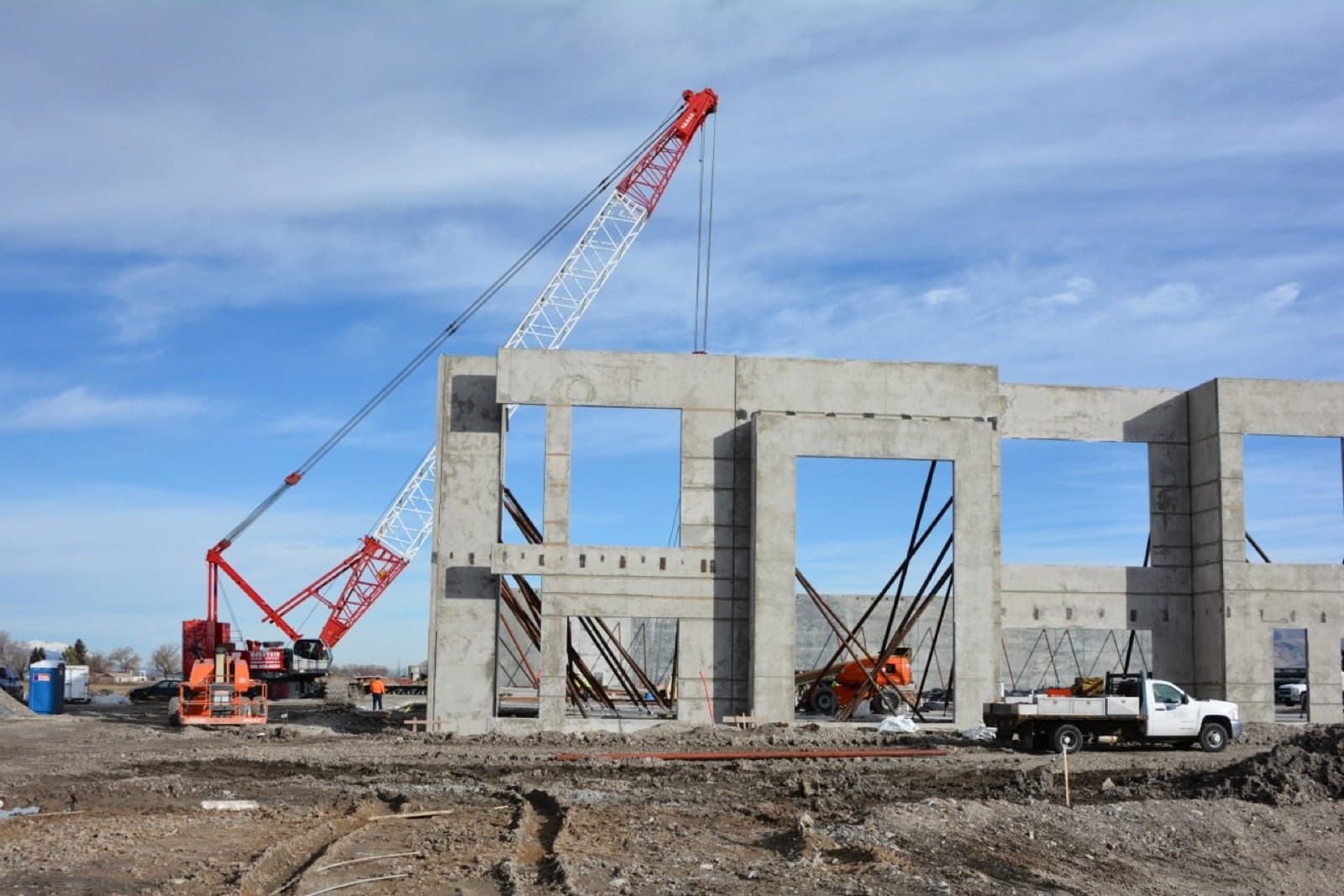
Concrete Paving and Flatwork in El Paso, TX
Concrete flatwork in El Paso takes punishment that most other US markets don't understand. The combination of 297-plus sunny days per year, summer surface temperatures that can exceed 165 degrees Fahrenheit on unshaded pavement, extreme low humidity that accelerates surface drying during placement, and alkaline caliche subgrade creates a durability gauntlet that eliminates shortcuts in mix design, curing, and jointing. Concrete Contractors of El Paso approaches every flatwork scope with an evaporation rate calculation before each pour day begins — wind, temperature, relative humidity, and concrete temperature all feed into that calculation, and if conditions push above 0.20 lb/ft²/hr we either mobilize earlier, apply evaporation retarder, or reschedule. Joints are the second critical variable: El Paso flatwork fails most often at joints, not in the field, because joint spacing that works in a 70-degree coastal climate is inadequate for 100-degree concrete temperatures followed by 20-degree winter nights. We use shorter contraction joint spacing, thicker expansion material, and sealants rated for desert UV exposure. For projects with Spanish-Colonial or Pueblo architectural character, we integrate decorative broom finishes, exposed-aggregate borders, and colored concrete accent bands that complement the regional design vocabulary.
Concrete flatwork in El Paso is a discipline where the pour-day decision is as important as the mix design. The Chihuahuan Desert combination of low humidity, high wind, and high temperatures creates evaporation conditions that can cross the 0.20 lb/ft²/hr plastic-shrinkage threshold on any afternoon from April through October — sometimes by 9 a.m. on windy spring days. Concrete Contractors of El Paso establishes pour-day evaporation monitoring as a standing practice: we calculate the evaporation rate from ASHRAE or ACI 305 nomograph inputs at the start of every flatwork pour day, and we have an explicit protocol for each threshold — below 0.10 we proceed normally, 0.10–0.20 we apply evaporation retarder and adjust troweling timing, above 0.20 we evaluate whether an early morning start, portable windscreen installation, or schedule shift is required. That discipline is not optional for decorative flatwork where surface blemishes from plastic shrinkage cracking cannot be corrected without visible patches that destroy the aesthetic intent.
Decorative concrete for El Paso's Spanish-Colonial and Pueblo-style commercial and residential projects requires a palette of techniques that our crews execute regularly. Exposed-aggregate finishes — using El Paso-quarried river gravel, Ruidoso mountain aggregate, or colored quartz — complement the Chihuahuan Desert geological environment and age gracefully under UV exposure that would degrade colored concrete coatings or stains. Broom finishes applied in a herringbone or diagonal pattern at pedestrian plaza entries reference the traditional Saltillo tile and terracotta paving of Juárez-influenced architecture. Colored concrete using iron oxide pigments — terra cotta, sand buff, and adobe tan — integrates with the warm masonry tones of Pueblo and Spanish revival facades without the maintenance burden of colored sealers that bleach in El Paso's UV environment within 18 months.
Project Context and Delivery Priorities
In El Paso, concrete paving and flatwork projects usually succeed when preconstruction, field access, and turnover planning are treated as one sequence instead of disconnected tasks. We stay close to the owner, design team, and key trades from the earliest scope conversations so the delivery plan reflects the real site constraints, the expected handoff dates, and the operational pressure that often comes with commercial work in the Borderplex.
Before mobilization, we look at permits, utility windows, haul routes, staging needs, and any overlaps with active operations or neighboring development. That matters in El Paso because many sites combine tight access, weather exposure, and multiple jurisdictional touchpoints. The goal is not only to start work quickly, but to start in a way that protects productivity after the first trade arrives on site.
Once work is underway, the emphasis shifts to sequencing and accountability. We track the work by milestone, keep communication practical, and make sure each handoff leaves the next crew with a clean path forward. That approach helps owners avoid the slow drift that can happen when field decisions, submittals, and change coordination are left to accumulate until the end of the job.
As the project closes out, we focus on punch resolution, documentation, and operational readiness. For owners and facility teams, the best handoff is one that explains what was built, how the systems were coordinated, and what should be watched during the first months after turnover. That is the standard we try to maintain on every concrete paving and flatwork assignment.
Scope Coverage
- Desert-climate flatwork with evaporation-retarder protocols, shortened joint spacing, and UV-rated sealants
- Truck aprons and drive lanes with joint layouts engineered for B-train cross-border traffic loading
- Decorative broom, exposed-aggregate, and colored concrete for Spanish-Colonial and Pueblo-style plazas
- Drainage alignment with finished elevations designed for monsoon-event runoff control
The scope above is most effective when it is structured for the specific end use of the building, the access constraints on the site, and the owner's expected turnover window. We use those priorities to keep the work aligned with the build instead of treating each task as a standalone event.
Delivery Process
- Evaporation rate calculation and early-morning or late-afternoon pour scheduling for desert conditions
- Subgrade caliche verification, moisture conditioning, and proof-roll before reinforcement placement
- Placement, finishing, evaporation retarder application, and wet-cure membrane installation
- Post-pour quality review, joint sawcutting within desert-climate timing windows, and documentation
During delivery, we keep an eye on the items that usually create the most friction: submittal timing, trade stacking, access changes, material lead times, and inspection readiness. Keeping those issues visible early makes the schedule easier to protect later.
Why Choose Us
- Evaporation rate monitoring as a standing pour-day protocol with explicit threshold actions to prevent plastic-shrinkage cracking
- Exposed-aggregate finishes using Chihuahuan Desert and New Mexico mountain aggregates for authentic regional decorative concrete
- Pueblo and Spanish-Colonial decorative concrete — broom herringbone, iron oxide color, Saltillo-complement finishes — executed regularly on El Paso projects
Typical Timeline
Standard truck court or drive aisle: 2–4 weeks. Large industrial paving area: 4–12 weeks. Decorative plaza flatwork: 3–6 weeks depending on finish complexity and pattern.
Planning Notes For Owners and Operators
Scope clarity matters early because concrete paving and flatwork work often affects downstream trades, equipment placement, and opening dates.
The strongest schedules come from realistic phasing, not optimistic assumptions about how quickly all crews can move through the same space.
If the project touches multiple jurisdictions or corridor access points, we map those dependencies before the first field activity begins.
Owners usually benefit from early procurement checks on reinforcing steel, embeds, specialty concrete mixes, and any finish requirements that could change curing or turnover timing.
When a site stays active during construction, we also plan around access separation, safety controls, and the order in which areas can realistically be released back to operations.
Coordination That Protects Turnover
The strongest concrete paving and flatwork deliveries in El Paso are the ones that account for owner operations long before the last punch walk. We keep closeout, access restoration, and documentation in view throughout the job so final turnover does not feel like a separate phase that starts after the work is already complete.
Service Area Alignment
We provide concrete paving and flatwork support in El Paso, TX, and nearby Texas and New Mexico markets where schedule control and concrete quality are essential.
Concrete Paving and Flatwork FAQs
Standard truck court concrete in El Paso should use contraction joint spacing no greater than 12 feet in either direction for 6-inch slab thickness, and no greater than 15 feet for 8-inch thickness. The 20-to-24-foot joint spacing that is adequate in coastal Texas climates — where concrete surface temperatures stay in a narrower annual range — produces uncontrolled cracking in El Paso's extreme thermal cycling. Joints are sawn within 6 hours of placement during summer pours to prevent bridging cracks from forming before the saw reaches the joint location — in El Paso's rapid-heat-gain environment, delayed sawcutting is a common cause of random cracking in truck court concrete that should have cracked at the joints.
Spring is the highest-risk season for plastic shrinkage cracking in El Paso: low humidity, high wind from west Texas pressure systems, and rapidly rising concrete temperatures combine to push evaporation rates above 0.20 lb/ft²/hr before 9 a.m. on many April and May mornings. Summer concrete pours benefit from the relative humidity increase from monsoon moisture — El Paso's humidity climbs from 5–10 percent in spring to 20–40 percent during monsoon season, which meaningfully reduces evaporation risk. Fall and early morning pours are the most favorable schedule windows for large flatwork placements. We never schedule significant flatwork pours on forecast high-wind spring days without explicit evaporation rate analysis confirming conditions will be acceptable.
Exposed-aggregate concrete using locally sourced aggregate — Chihuahuan Desert river gravel, New Mexico mountain quartz, or El Paso-quarried decomposed granite — ages the best in El Paso's UV environment because the aggregate color is stable and the exposed aggregate texture maintains visual interest as the surface cement paste weathers. Integral iron-oxide colored concrete in terra cotta, adobe tan, and sand buff is the most UV-stable coloring method — the pigment doesn't bleach or change color under UV because it's in the concrete matrix, not on the surface. Colored concrete sealers and topical stains applied to the surface bleach noticeably in El Paso's UV environment within 18 to 24 months and need regular reapplication — we recommend against them for plaza applications where maintenance budget is limited.
Related Service Pages
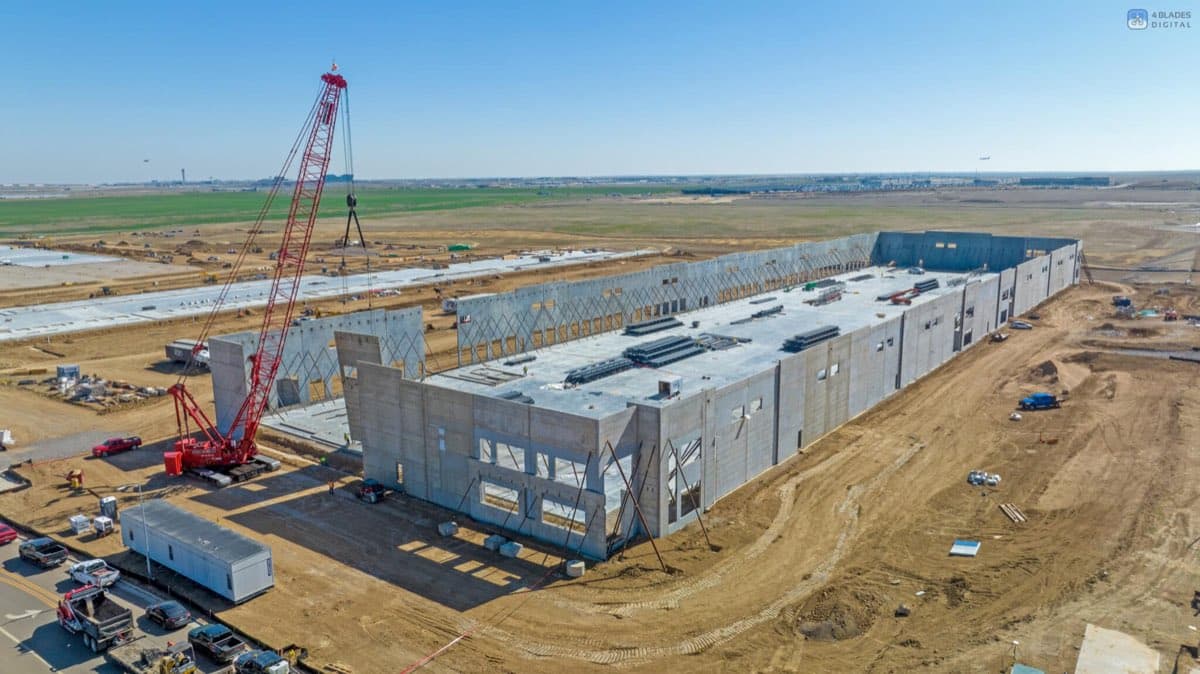
Tilt-Wall Construction
Engineered tilt-wall shells for distribution, maquila-support, and industrial facilities across the Borderplex — poured on caliche-stabilized beds and stood in El Paso's low-humidity desert air.
Open Service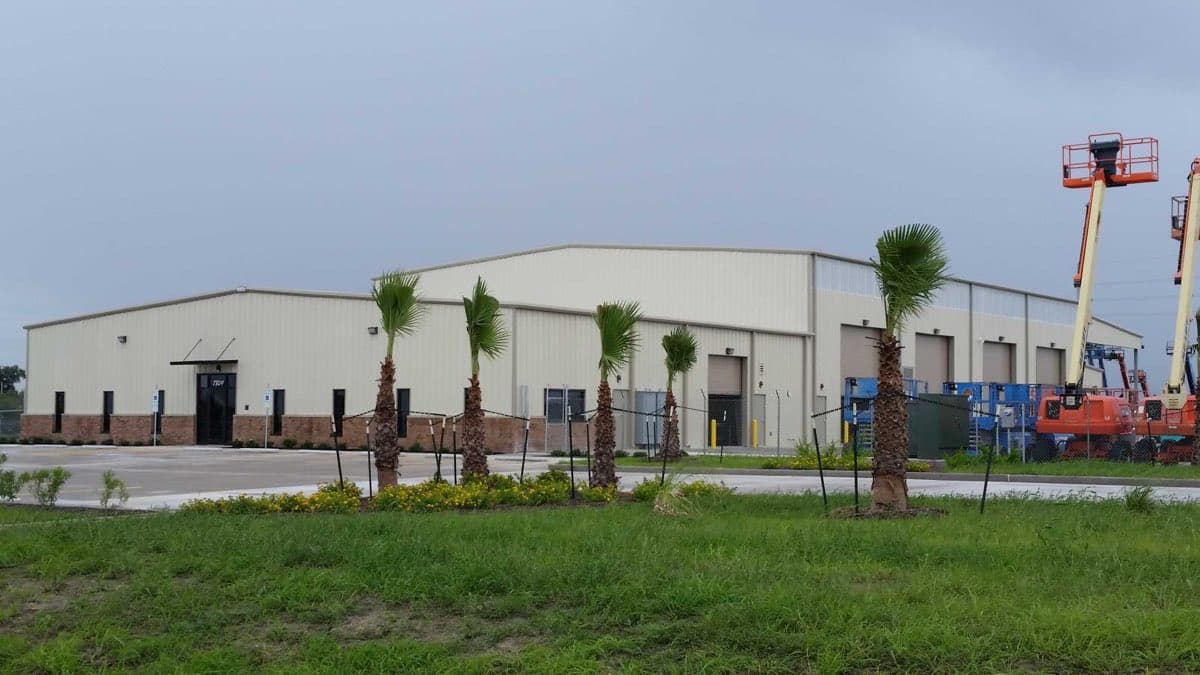
Warehouse Construction
Ground-up and expansion warehouse builds designed for BNSF/UP intermodal connectivity, Cd. Juárez maquila supply chains, and the El Paso/Santa Teresa logistics corridor.
Open Service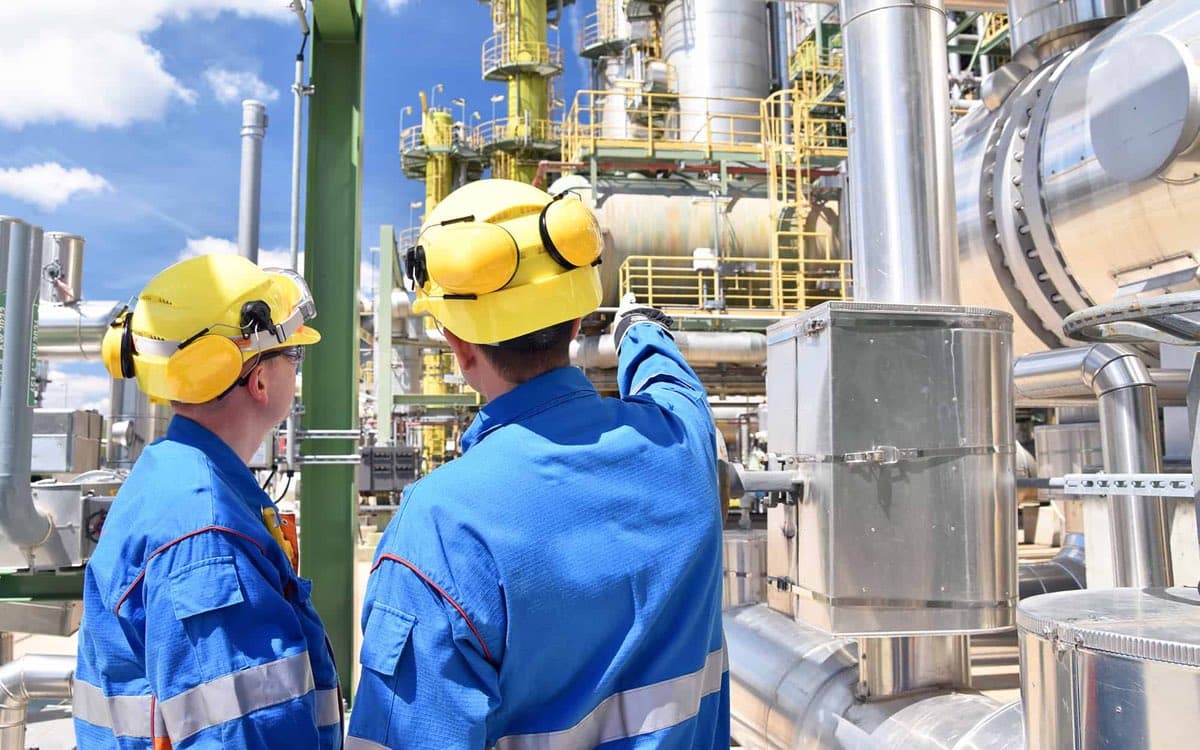
Industrial Construction
Industrial facility construction for maquiladora-support manufacturing, Fort Bliss defense logistics, and Borderplex process environments where sequencing and safety compliance are non-negotiable.
Open Service
Commercial Construction
Commercial general contracting for El Paso's Sun City corridor — from UTEP-adjacent medical office to West El Paso mixed-use redevelopment — with concrete expertise at the foundation of every scope.
Open Service