
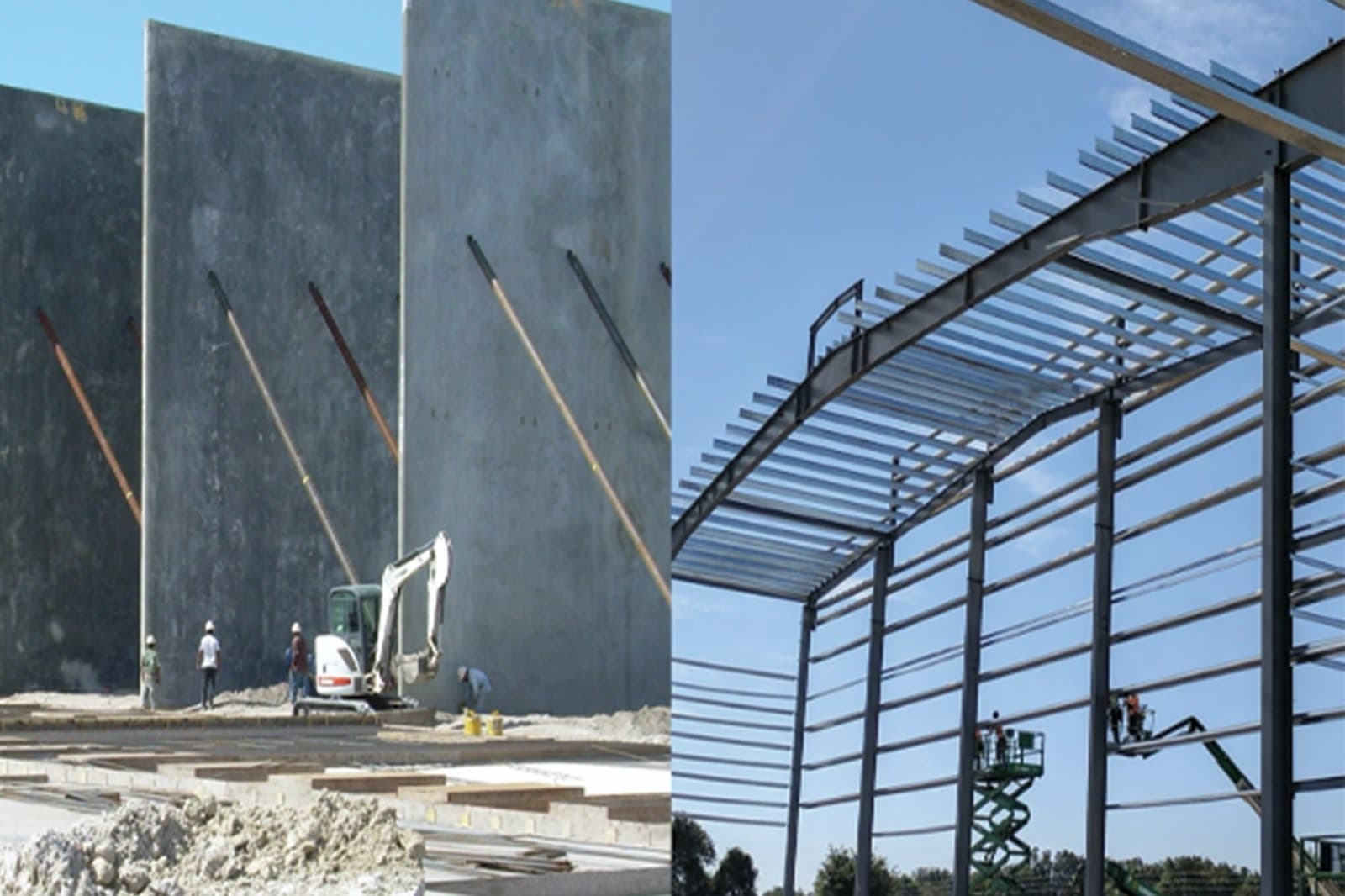
Tilt-Wall Construction in El Paso, TX
Tilt-wall construction defines the industrial skyline from East El Paso to Santa Teresa, and for good reason: the climate here — dry Chihuahuan Desert air that drops below 15 percent humidity on a typical afternoon — accelerates concrete strength gain and makes outdoor panel-casting schedules predictable. Concrete Contractors of El Paso coordinates the full sequence from casting-bed prep through crane picks for facilities ranging from small maquila-support warehouses to 400,000-square-foot cross-dock buildings. Sulfate-resistant Type V cement and fly-ash blends protect panels from El Paso's naturally alkaline, caliche-bearing soils. We use plastic-shrinkage retarders on pour days when the desert combination of wind, heat, and low humidity pushes evaporation rates above 0.20 lb/ft²/hr — conditions that arrive regularly along the Loop 375 and US 54 corridors. Our lift studies account for the extreme temperature swings between a 95-degree August afternoon and a 35-degree pre-dawn crane mobilization, so picks go safely the first time.
Tilt-wall dominates the Borderplex industrial landscape for practical reasons. In El Paso's Chihuahuan Desert climate — relative humidity routinely below 15 percent, summer afternoons hot enough to cook concrete surfaces in minutes — casting beds cure fast, crane picks can happen six days a week without weather delays, and the completed panels resist moisture-driven deterioration better than metal building skin. Our crews have cast and erected panels for facilities ranging from 40,000-square-foot maquila-support buildings in Horizon City to 350,000-square-foot cross-dock distribution centers in Santa Teresa, where freight crossing the Bridge of the Americas needs to move fast through sorting and staging. We design casting beds with caliche-stabilized base and bond breaker applied on top — El Paso's caliche is calcium-carbonate cemented and provides excellent bearing, but its alkalinity means we confirm bond-breaker chemical compatibility before specifying products. Panel mix designs use Type V or Type IP blended cement to resist the sulfate load in El Paso's soils, and fly-ash replacement at 20–25 percent reduces heat-of-hydration cracking risk during summer pours.
Erection planning for Borderplex tilt-wall accounts for the desert wind patterns that make the El Paso Franklin Mountain pass area — the natural wind tunnel between the Franklins and the Sierra de Juárez — particularly challenging for crane picks on panels over 100,000 pounds. We run wind-load analysis on crane stability during pick and swing, confirm laydown areas allow safe panel rotation, and build erection windows around morning periods when regional wind speeds are typically lowest. Our coordination with structural engineers covers panel joint detailing, the transition from braced condition to structural diaphragm, and the embed coordination that connects tilt-wall to the roof structure and dock equipment framing that follows erection. Downstream trades — roofing, glazing, dock levelers, and maquila process entries — receive clear handoff dates rather than estimates.
Project Context and Delivery Priorities
In El Paso, tilt-wall construction projects usually succeed when preconstruction, field access, and turnover planning are treated as one sequence instead of disconnected tasks. We stay close to the owner, design team, and key trades from the earliest scope conversations so the delivery plan reflects the real site constraints, the expected handoff dates, and the operational pressure that often comes with commercial work in the Borderplex.
Before mobilization, we look at permits, utility windows, haul routes, staging needs, and any overlaps with active operations or neighboring development. That matters in El Paso because many sites combine tight access, weather exposure, and multiple jurisdictional touchpoints. The goal is not only to start work quickly, but to start in a way that protects productivity after the first trade arrives on site.
Once work is underway, the emphasis shifts to sequencing and accountability. We track the work by milestone, keep communication practical, and make sure each handoff leaves the next crew with a clean path forward. That approach helps owners avoid the slow drift that can happen when field decisions, submittals, and change coordination are left to accumulate until the end of the job.
As the project closes out, we focus on punch resolution, documentation, and operational readiness. For owners and facility teams, the best handoff is one that explains what was built, how the systems were coordinated, and what should be watched during the first months after turnover. That is the standard we try to maintain on every tilt-wall construction assignment.
Scope Coverage
- Caliche-stabilized casting beds and panel yard planning tailored to El Paso soils
- Sulfate-resistant mix designs to counter alkaline Chihuahuan Desert subgrade
- Lift hardware, crane path studies, and erection sequencing in desert wind conditions
- Envelope transition planning for roof, glazing, dock systems, and maquila process entries
The scope above is most effective when it is structured for the specific end use of the building, the access constraints on the site, and the owner's expected turnover window. We use those priorities to keep the work aligned with the build instead of treating each task as a standalone event.
Delivery Process
- Preconstruction constructability review with structural and geotechnical teams
- Procurement alignment for Type V rebar, lifting hardware, and crane mobilization
- Panel casting, low-humidity curing protocols, and pre-pick quality checkpoints
- Erection sequencing and closeout coordination with roofing, glazing, and MEP trades
During delivery, we keep an eye on the items that usually create the most friction: submittal timing, trade stacking, access changes, material lead times, and inspection readiness. Keeping those issues visible early makes the schedule easier to protect later.
Why Choose Us
- Borderplex-specific casting bed design using caliche stabilization and sulfate-compatible bond breaker systems
- Desert-wind crane pick planning with Franklin Mountain pass wind-load protocols for heavy panels
- Type V and fly-ash mix designs tuned to El Paso's alkaline soil chemistry and summer heat-of-hydration risk
Typical Timeline
Panel casting: 8–12 weeks including caliche bed prep and cure cycle. Erection: 3–6 weeks depending on panel count, crane availability, and desert wind windows.
Planning Notes For Owners and Operators
Scope clarity matters early because tilt-wall construction work often affects downstream trades, equipment placement, and opening dates.
The strongest schedules come from realistic phasing, not optimistic assumptions about how quickly all crews can move through the same space.
If the project touches multiple jurisdictions or corridor access points, we map those dependencies before the first field activity begins.
Owners usually benefit from early procurement checks on reinforcing steel, embeds, specialty concrete mixes, and any finish requirements that could change curing or turnover timing.
When a site stays active during construction, we also plan around access separation, safety controls, and the order in which areas can realistically be released back to operations.
Coordination That Protects Turnover
The strongest tilt-wall construction deliveries in El Paso are the ones that account for owner operations long before the last punch walk. We keep closeout, access restoration, and documentation in view throughout the job so final turnover does not feel like a separate phase that starts after the work is already complete.
Service Area Alignment
We provide tilt-wall construction support in El Paso, TX, and nearby Texas and New Mexico markets where schedule control and concrete quality are essential.
Tilt-Wall Construction FAQs
El Paso's relative humidity routinely drops below 15 percent in spring and summer afternoons, which accelerates surface moisture loss on casting beds and can cause plastic shrinkage cracking if curing isn't started within minutes of finishing. We apply wet burlap and polyethylene curing blankets immediately after final troweling on all El Paso panel pours and keep them in place for a minimum of 7 days. The low humidity also means bond breaker applied to casting beds can dry faster than specified — we verify product open-time compatibility with El Paso conditions before application.
We specify Type V or Type IP blended cement with 20–25 percent fly-ash on El Paso tilt-wall projects where the geotechnical report confirms Class 2 or higher sulfate exposure from caliche and alluvial soil chemistry. Type V adds 10–15 percent to cement cost but prevents the ettringite-driven concrete degradation that can cause surface spalling on panels in contact with alkaline Borderplex soils at grade level. For sites with lower measured sulfate levels, Type I/II with a pozzolan addition is evaluated as a cost-effective alternative.
The El Paso pass area between the Franklin Mountains and the Sierra de Juárez accelerates and channels wind from west to east, regularly producing gusts above 30 mph that affect crane stability during panel picks. We run wind-load analysis on crane stability during the pick-and-swing sequence for every panel over 80,000 pounds, build erection windows around morning hours when regional wind speeds are statistically lower, and have explicit stop-work wind thresholds in the erection plan that the crane operator and superintendent both understand before picks begin.
Related Service Pages
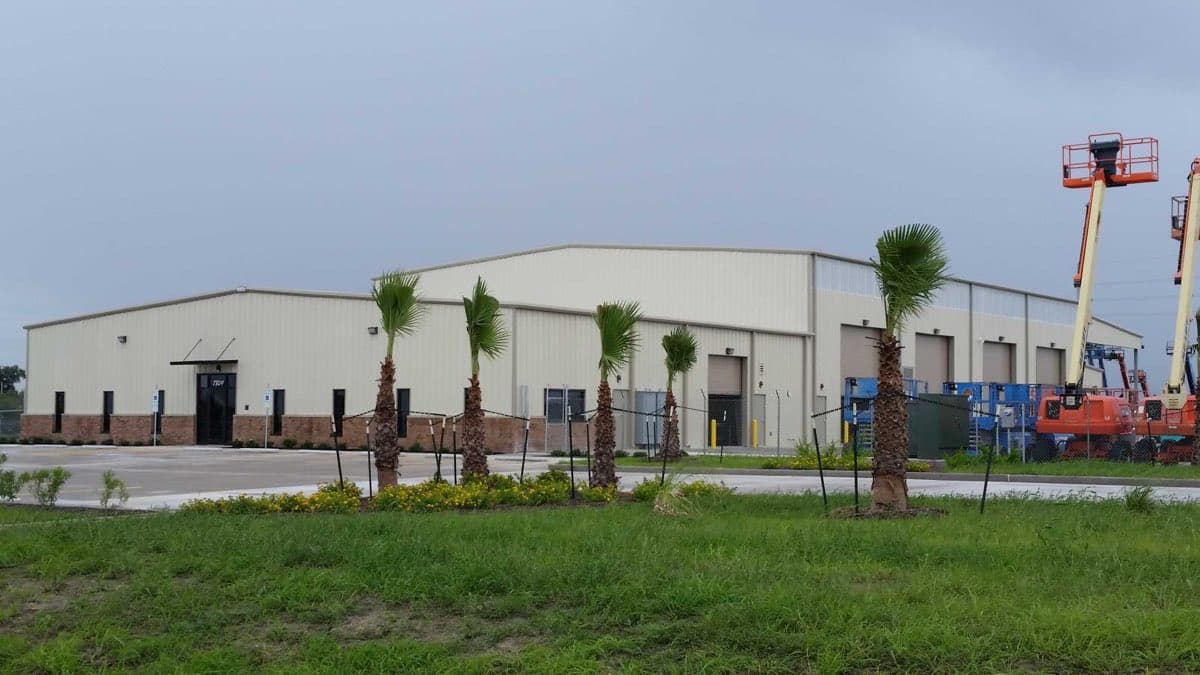
Warehouse Construction
Ground-up and expansion warehouse builds designed for BNSF/UP intermodal connectivity, Cd. Juárez maquila supply chains, and the El Paso/Santa Teresa logistics corridor.
Open Service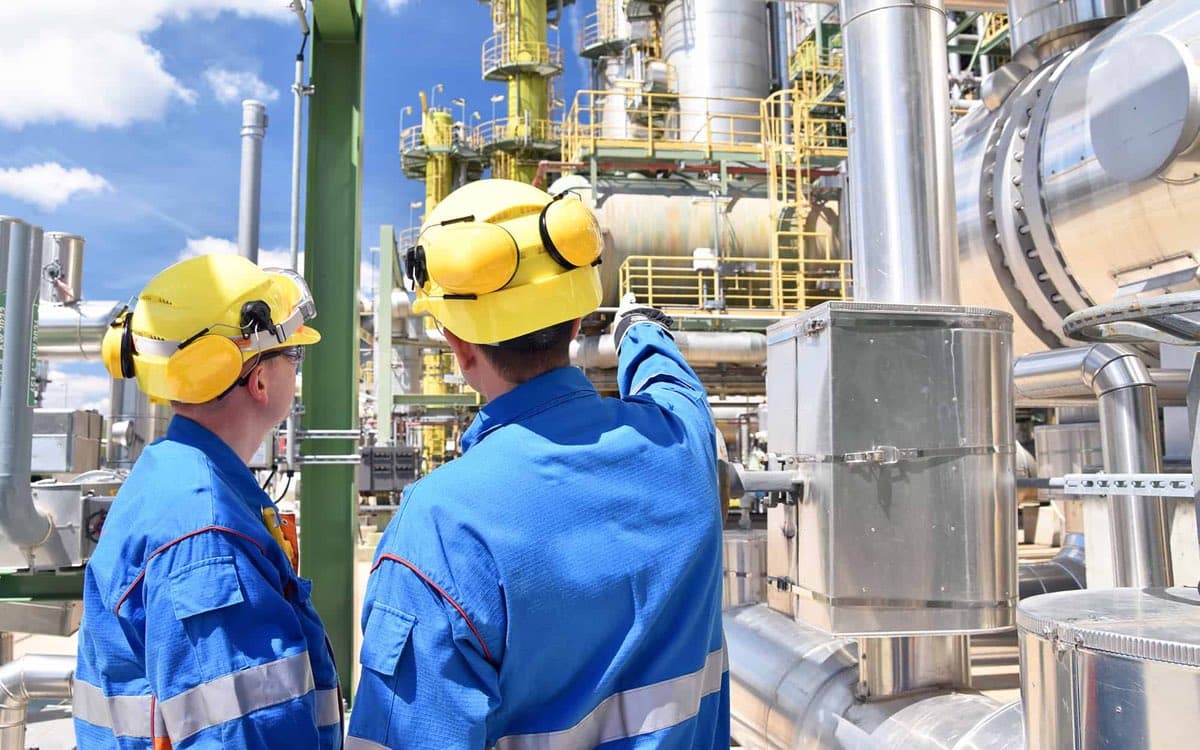
Industrial Construction
Industrial facility construction for maquiladora-support manufacturing, Fort Bliss defense logistics, and Borderplex process environments where sequencing and safety compliance are non-negotiable.
Open Service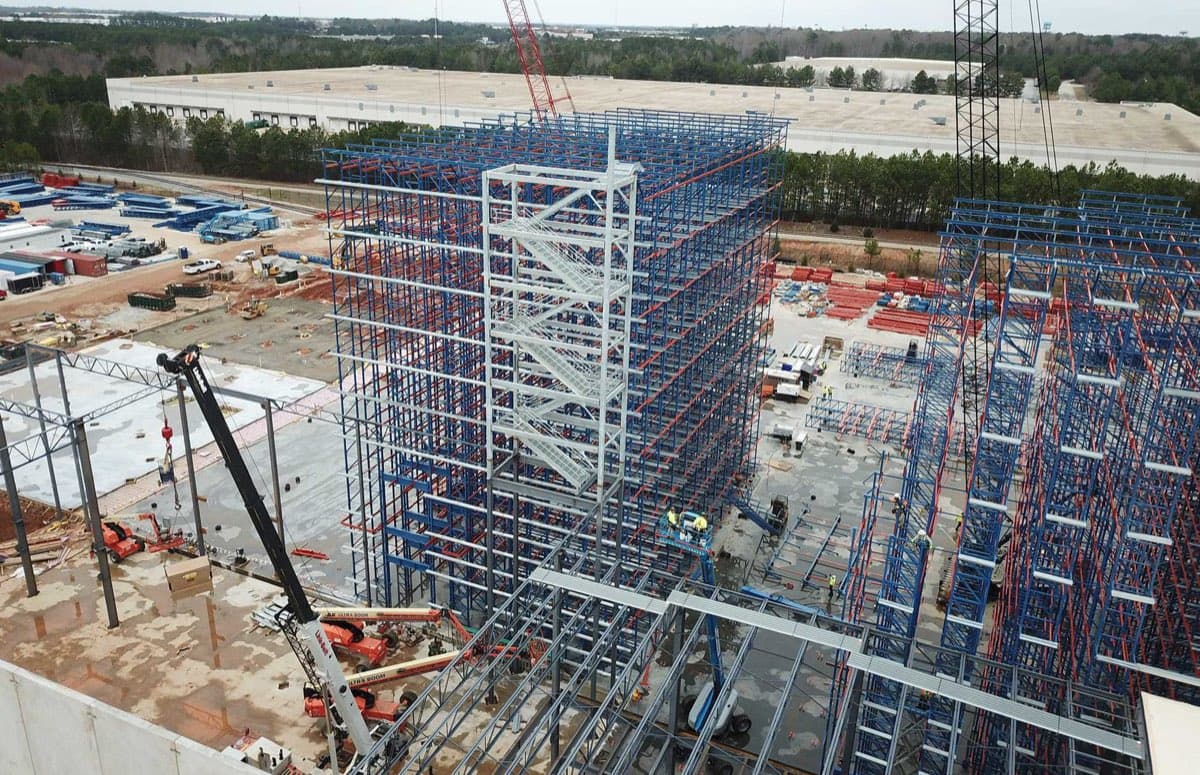
Commercial Construction
Commercial general contracting for El Paso's Sun City corridor — from UTEP-adjacent medical office to West El Paso mixed-use redevelopment — with concrete expertise at the foundation of every scope.
Open Service
Shopping Center Construction
Shopping center and retail plaza construction for El Paso's dense retail corridors — Montwood, Zaragoza, Lee Trevino — with phased delivery grounded in multi-tenant Hispanic family ownership and franchise opening dates.
Open Service