
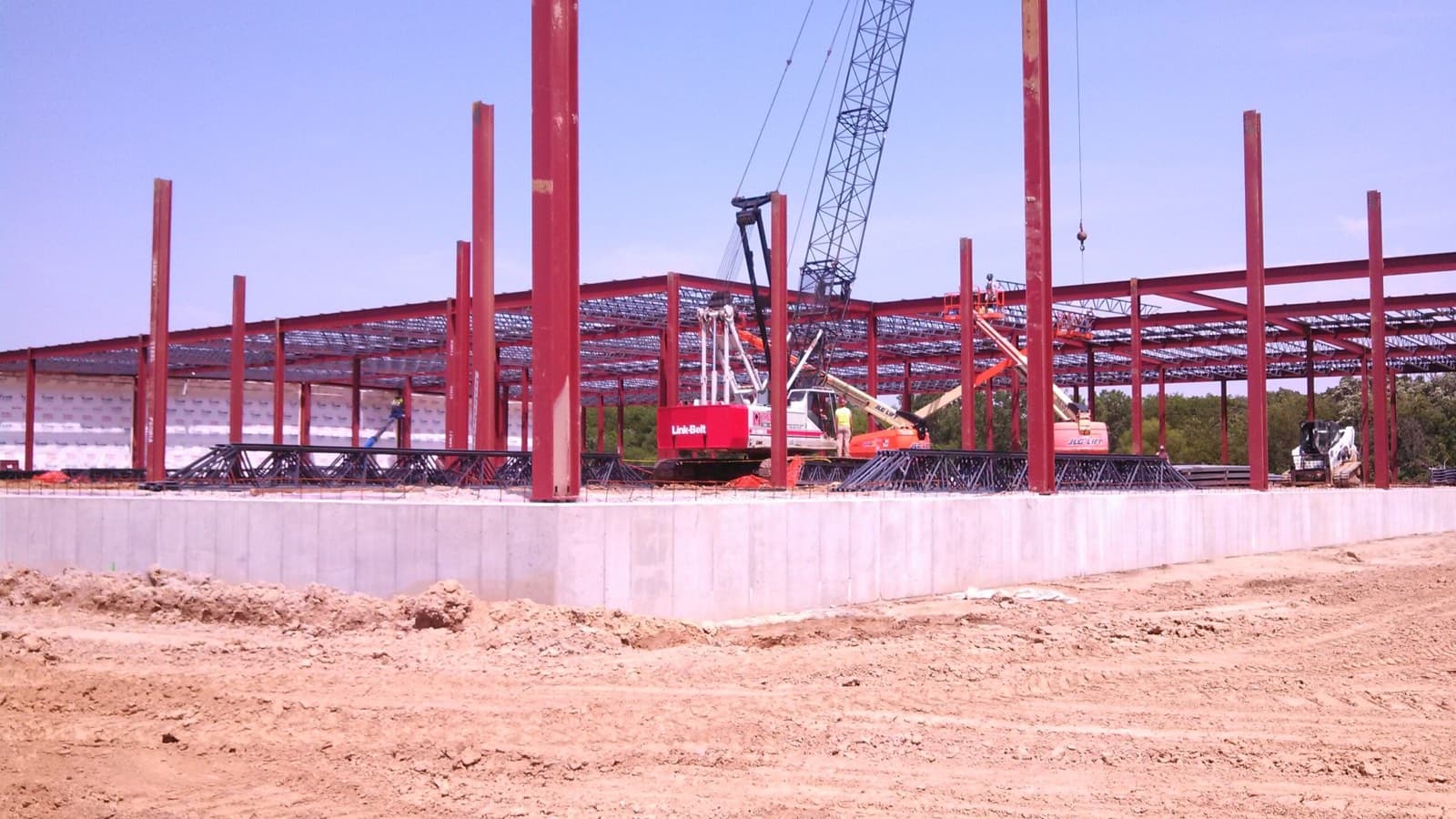
Distribution Center Construction in El Paso, TX
El Paso is one of the busiest land-port-of-entry markets in North America — roughly $100 billion in annual trade crosses through the Córdova and Ysleta bridges into Cd. Juárez, and BNSF and Union Pacific each operate major intermodal facilities on both sides of the state line. Distribution centers here don't just move general cargo — they process maquila sub-assemblies, sort cross-border e-commerce returns, and stage finished goods for the westbound I-10 lanes toward Los Angeles. Concrete Contractors of El Paso builds the concrete infrastructure that supports those operations: super-flat slabs at FF50/FL40 tolerances for automated sortation, dock aprons that withstand constant B-train truck traffic without joint faulting, and trailer yard paving engineered for the maximum loading conditions of loaded 53-foot trailers parked across alkaline, caliche-stabilized subgrade. We build in close coordination with racking vendors, automation integrators, and maquila logistics operators who often have active operations on adjacent land and require construction sequencing that doesn't disrupt cross-border shipments.
Distribution center concrete in the El Paso/Santa Teresa market carries specifications driven directly by the maquila supply chain operations these buildings support. Cross-border logistics operators handling auto parts from Tier-1 Juárez suppliers, consumer electronics assembled in Chihuahua maquiladoras, and BNSF intermodal freight sorting all use equipment — reach trucks, turret trucks, autonomous mobile robots — that places flatness demands on slab concrete that typical commercial flatwork specs don't come close to meeting. Our distribution center slabs target FF50/FL40 for conventional reach truck operations and FF60/FL50 for very-narrow-aisle and automated sortation environments, which requires laser-screed placement, continuous single-pass placement strategy for defined joint-free areas, and timing of troweling operations that accounts for El Paso's rapid evaporation rate slowing the bleed water cycle compared to humid markets. We pull flatness testing data with a Dipstick or equivalent F-number device within 72 hours of placement and provide owners with a slab map rather than a single average number.
Dock concrete at El Paso distribution centers takes concentrated wheel loading from B-train truck combinations — 40-plus tons gross vehicle weight on dual-axle groups — crossing the dock apron threshold repeatedly throughout the day on facilities processing 24/7 cross-border freight. Apron concrete is designed for a minimum of 5,000 psi, with thickened edges at construction joints and dowels sized for the actual vehicle loading rather than generic truck apron tables that assume standard US 80,000-lb GVW configurations. The dock-to-interior slab joint is the highest-maintenance concrete detail in a distribution center: we treat it as an isolation joint with load transfer armor, not as a simple contraction joint, because the differential loading between the loaded apron and the interior slab creates faulting in dock joints faster than any other flatwork failure mode.
Project Context and Delivery Priorities
In El Paso, distribution center construction projects usually succeed when preconstruction, field access, and turnover planning are treated as one sequence instead of disconnected tasks. We stay close to the owner, design team, and key trades from the earliest scope conversations so the delivery plan reflects the real site constraints, the expected handoff dates, and the operational pressure that often comes with commercial work in the Borderplex.
Before mobilization, we look at permits, utility windows, haul routes, staging needs, and any overlaps with active operations or neighboring development. That matters in El Paso because many sites combine tight access, weather exposure, and multiple jurisdictional touchpoints. The goal is not only to start work quickly, but to start in a way that protects productivity after the first trade arrives on site.
Once work is underway, the emphasis shifts to sequencing and accountability. We track the work by milestone, keep communication practical, and make sure each handoff leaves the next crew with a clean path forward. That approach helps owners avoid the slow drift that can happen when field decisions, submittals, and change coordination are left to accumulate until the end of the job.
As the project closes out, we focus on punch resolution, documentation, and operational readiness. For owners and facility teams, the best handoff is one that explains what was built, how the systems were coordinated, and what should be watched during the first months after turnover. That is the standard we try to maintain on every distribution center construction assignment.
Scope Coverage
- Super-flat slab placement at FF50/FL40 for automated sortation and maquila logistics equipment
- Dock infrastructure designed for B-train truck traffic and cross-border configuration requirements
- Trailer yard caliche-stabilized subgrade and heavy-duty pavement for loaded cross-border staging
- Process utility stub-outs and support spaces designed for maquila operations teams
The scope above is most effective when it is structured for the specific end use of the building, the access constraints on the site, and the owner's expected turnover window. We use those priorities to keep the work aligned with the build instead of treating each task as a standalone event.
Delivery Process
- Operational requirement intake with ownership teams and Cd. Juárez logistics coordinators
- Site and shell schedule aligned to BNSF/UP intermodal activation milestones
- MEP, technology, and automation pathway coordination with phased-area concrete placement
- Occupancy readiness with bilingual turnover documentation for binational operating teams
During delivery, we keep an eye on the items that usually create the most friction: submittal timing, trade stacking, access changes, material lead times, and inspection readiness. Keeping those issues visible early makes the schedule easier to protect later.
Why Choose Us
- FF50–FF60 super-flat slab placement with laser screed, evaporation-adjusted troweling, and 72-hour F-number slab mapping
- B-train-capacity dock apron concrete with armor-joint load transfer at the dock-to-interior transition
- Distribution center concrete specifications calibrated to Borderplex maquila supply chain equipment requirements
Typical Timeline
Shell and civil: 7–10 months for 200,000–400,000 sq ft with Borderplex permitting. Full build-out with automation-ready slab: add 3–6 months for interior systems.
Planning Notes For Owners and Operators
Scope clarity matters early because distribution center construction work often affects downstream trades, equipment placement, and opening dates.
The strongest schedules come from realistic phasing, not optimistic assumptions about how quickly all crews can move through the same space.
If the project touches multiple jurisdictions or corridor access points, we map those dependencies before the first field activity begins.
Owners usually benefit from early procurement checks on reinforcing steel, embeds, specialty concrete mixes, and any finish requirements that could change curing or turnover timing.
When a site stays active during construction, we also plan around access separation, safety controls, and the order in which areas can realistically be released back to operations.
Coordination That Protects Turnover
The strongest distribution center construction deliveries in El Paso are the ones that account for owner operations long before the last punch walk. We keep closeout, access restoration, and documentation in view throughout the job so final turnover does not feel like a separate phase that starts after the work is already complete.
Service Area Alignment
We provide distribution center construction support in El Paso, TX, and nearby Texas and New Mexico markets where schedule control and concrete quality are essential.
Distribution Center Construction FAQs
Achieving FF50+ on large slab pours in El Paso's rapid-evaporation climate requires a different approach than humid markets. We use laser-screed equipment for areas over 5,000 square feet, plan pours as single continuous placements within defined joint-free areas to eliminate cold joints that degrade flatness, and time troweling operations to the bleed water cycle — which occurs faster in El Paso's dry heat than the screed operator may expect from experience in Houston or Dallas. F-number testing with a Dipstick or equivalent walking device within 72 hours of placement produces a slab flatness map by grid that we provide to the owner, automation integrator, and racking vendor — not a single average number.
B-train truck combinations operating in maquila cross-border logistics carry up to 45 tonnes gross vehicle weight in Mexico — heavier than standard US 80,000-lb configurations — and they concentrate that load on dock apron concrete through repeated daily crossings. We specify dock apron concrete at 5,000 psi minimum with 6-inch minimum thickness at the dock-to-interior joint, thickened to 8 inches at the dock leveler pit edges where concentrated loading occurs. The dock-to-interior slab joint is treated as an armored isolation joint with load-transfer angle iron embedded in the apron edge and keyed against the interior slab, not as a simple contraction joint that will fault under this load cycle.
Maquila logistics operators with Juárez-based management teams typically want construction progress visibility without crossing the border to visit the El Paso site every week. We provide Spanish-language weekly progress reports with photo documentation that the Juárez operations team can review without translation dependency. Critical milestone decisions — concrete pour scheduling, slab flatness acceptance, dock equipment rough-in approval — are communicated in Spanish with sufficient technical detail that the Juárez operations manager can approve or raise concerns without having to defer to a translator who may not understand the technical stakes.
Related Service Pages
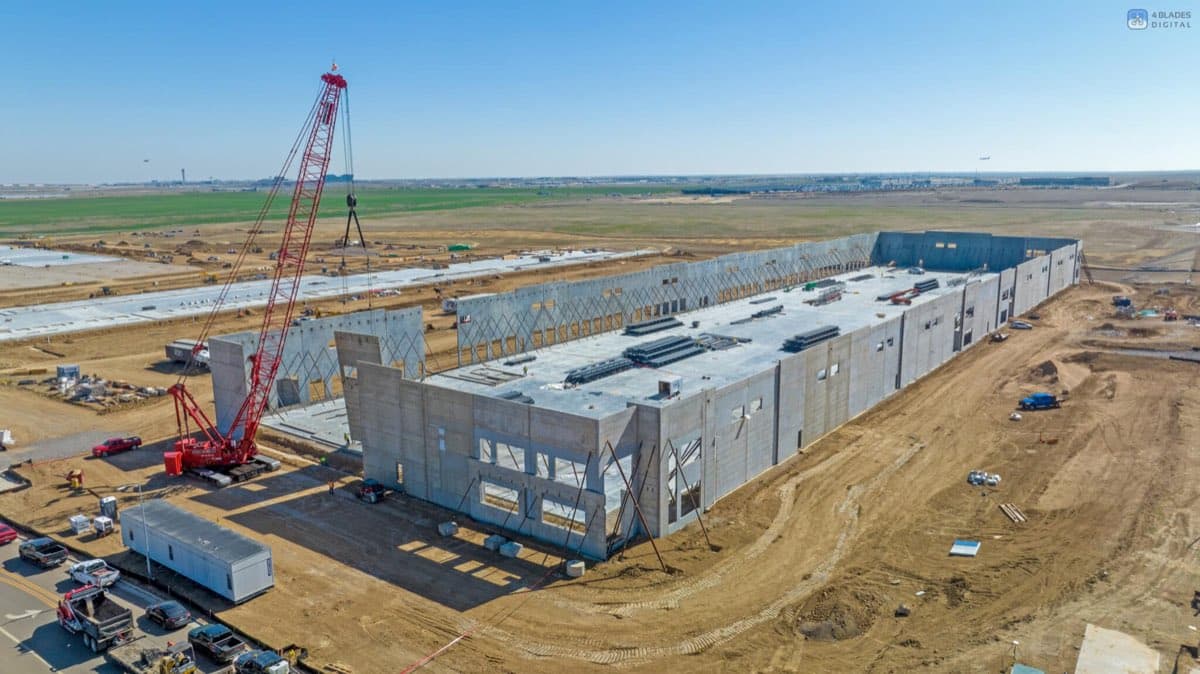
Tilt-Wall Construction
Engineered tilt-wall shells for distribution, maquila-support, and industrial facilities across the Borderplex — poured on caliche-stabilized beds and stood in El Paso's low-humidity desert air.
Open Service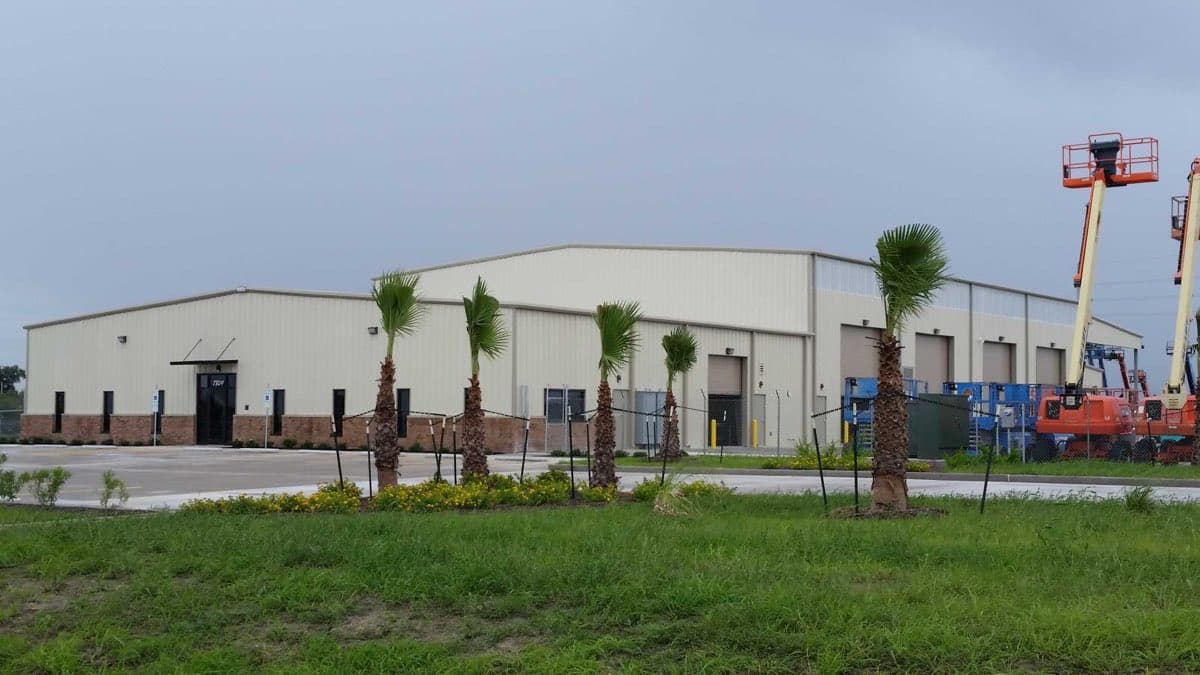
Warehouse Construction
Ground-up and expansion warehouse builds designed for BNSF/UP intermodal connectivity, Cd. Juárez maquila supply chains, and the El Paso/Santa Teresa logistics corridor.
Open Service
Industrial Construction
Industrial facility construction for maquiladora-support manufacturing, Fort Bliss defense logistics, and Borderplex process environments where sequencing and safety compliance are non-negotiable.
Open Service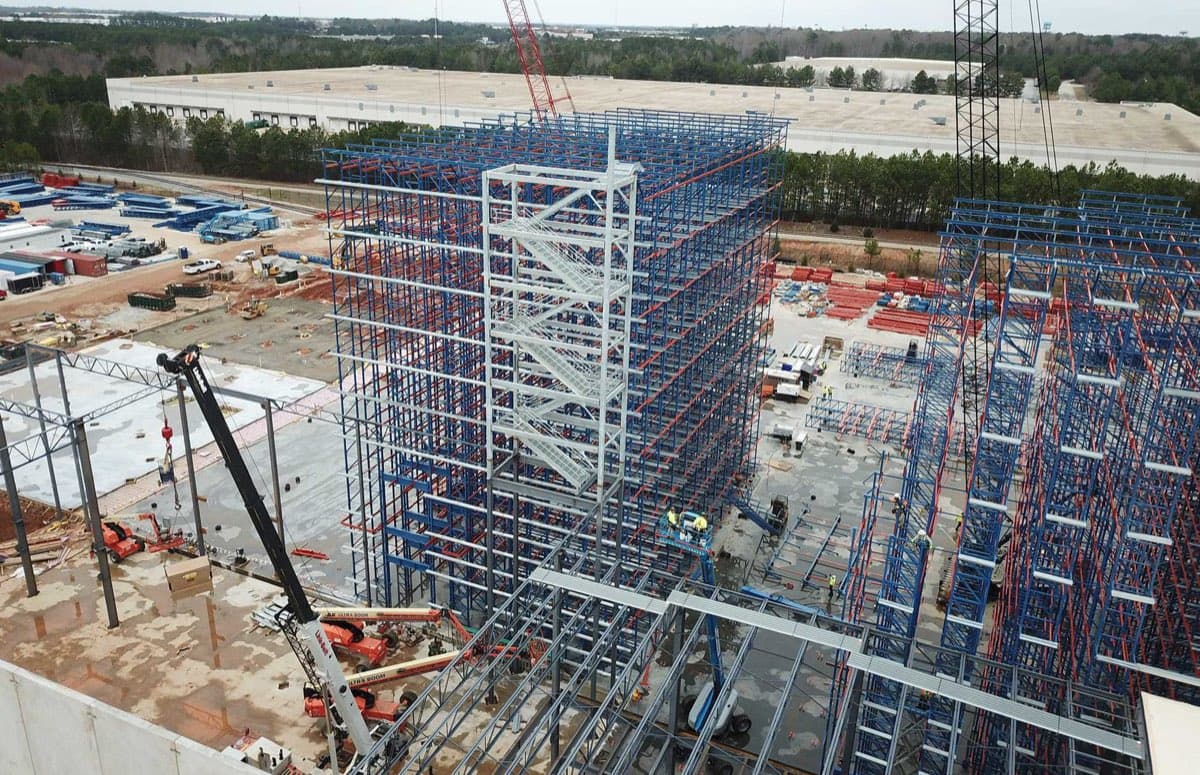
Commercial Construction
Commercial general contracting for El Paso's Sun City corridor — from UTEP-adjacent medical office to West El Paso mixed-use redevelopment — with concrete expertise at the foundation of every scope.
Open Service