
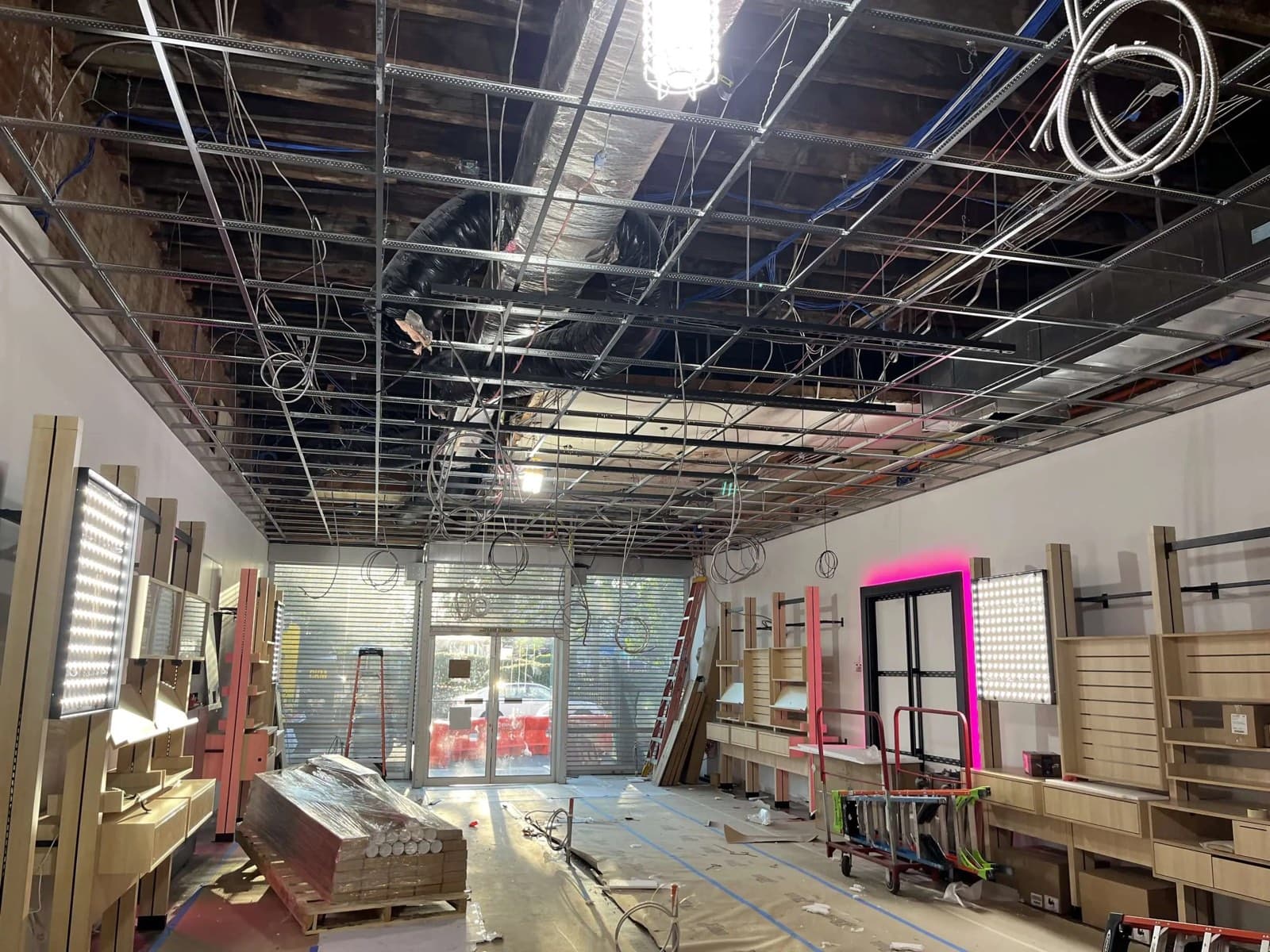
Tenant Improvement Build-Out in El Paso, TX
Tenant improvement work in El Paso's commercial stock often starts with a concrete conversation because the existing slabs are frequently not where the new tenant needs them to be. Industrial TI scopes regularly require sawcutting and trenching existing slabs to add utility corridors for maquila equipment or to install trench drains in food-processing conversions. Retail TI in El Paso's aging 1980s and 1990s strip centers — particularly along Montana Avenue, Alameda, and Lee Trevino — involves slab-on-grade that has been subjected to decades of thermal cycling, caliche movement, and moisture from monsoon-season saturation events. Concrete Contractors of El Paso approaches TI concrete work with a diagnostic first step: we verify existing slab thickness, check for rebar, and confirm what the existing caliche or fill condition looks like before proposing an approach. That discipline prevents TI concrete scopes from becoming open-ended excavation exercises. We then execute slab patch, patch-blend troweling, and new-pour sections with color and texture that minimizes visual discontinuity between old and new concrete in exposed-floor retail applications.
Tenant improvement concrete in El Paso's existing commercial inventory requires more diagnostic investigation than most TI contractors budget for, because El Paso's aging retail and industrial stock has concrete histories that aren't visible from the surface. East El Paso strip centers built in the 1980s on caliche-over-alluvial fill frequently have 4-inch slabs that were adequate for the original retail tenant mix but are too thin for the food-service or medical tenants now moving into those spaces. The caliche movement from monsoon-season moisture variability — caliche itself doesn't shrink-swell like clay, but the alluvial fill zones between caliche lenses can — creates differential slab movement that accumulates into visible joint faulting or crack patterns that indicate subgrade instability rather than surface wear. Concrete Contractors of El Paso probes existing slab thickness and condition before committing to TI concrete scope, so we can give owners an honest assessment of whether the existing slab supports the proposed tenant use or whether partial replacement is the lower long-term cost.
Sawcutting and concrete removal for utility trench installation in El Paso TI projects requires dust and silica exposure management that is more than a OSHA paperwork requirement — it's a practical concern for adjacent tenants and occupied buildings. El Paso's dry desert air keeps concrete cutting dust suspended longer than humid-air markets, and the alkaline concrete dust from caliche-affected slabs has a higher pH than typical portland concrete, making eye and respiratory protection more important, not less. We use wet sawcutting methods with vacuum shrouds and HEPA filtration on all interior concrete cutting in occupied-adjacent environments, and we verify air quality in adjacent occupied spaces before releasing them for reoccupancy after TI concrete work.
Project Context and Delivery Priorities
In El Paso, tenant improvement build-out projects usually succeed when preconstruction, field access, and turnover planning are treated as one sequence instead of disconnected tasks. We stay close to the owner, design team, and key trades from the earliest scope conversations so the delivery plan reflects the real site constraints, the expected handoff dates, and the operational pressure that often comes with commercial work in the Borderplex.
Before mobilization, we look at permits, utility windows, haul routes, staging needs, and any overlaps with active operations or neighboring development. That matters in El Paso because many sites combine tight access, weather exposure, and multiple jurisdictional touchpoints. The goal is not only to start work quickly, but to start in a way that protects productivity after the first trade arrives on site.
Once work is underway, the emphasis shifts to sequencing and accountability. We track the work by milestone, keep communication practical, and make sure each handoff leaves the next crew with a clean path forward. That approach helps owners avoid the slow drift that can happen when field decisions, submittals, and change coordination are left to accumulate until the end of the job.
As the project closes out, we focus on punch resolution, documentation, and operational readiness. For owners and facility teams, the best handoff is one that explains what was built, how the systems were coordinated, and what should be watched during the first months after turnover. That is the standard we try to maintain on every tenant improvement build-out assignment.
Scope Coverage
- Existing slab sawcutting, demo, and utility trench for maquila equipment and process upgrades
- Slab patching with patch-blend troweling for exposed-concrete retail floor continuity
- MEP rough-in trenching and backfill in occupied-adjacent environments with air quality controls
- Landlord coordination on existing slab thickness, rebar, and caliche-condition documentation
The scope above is most effective when it is structured for the specific end use of the building, the access constraints on the site, and the owner's expected turnover window. We use those priorities to keep the work aligned with the build instead of treating each task as a standalone event.
Delivery Process
- Site verification, slab thickness probing, and existing-condition documentation before scope commitment
- Fast-track buyout and submittal sequencing for tight occupancy deadlines
- Phased field execution with dust and concrete-cutting noise controls for active-adjacent tenants
- Punch completion and certificate-of-occupancy support for El Paso Development Services inspection
During delivery, we keep an eye on the items that usually create the most friction: submittal timing, trade stacking, access changes, material lead times, and inspection readiness. Keeping those issues visible early makes the schedule easier to protect later.
Why Choose Us
- Existing slab thickness probing and caliche subgrade assessment before TI concrete scope commitment — honest evaluation before pricing
- Wet sawcutting with HEPA vacuum shroud for occupied-adjacent interior concrete removal in El Paso's dry silica-suspension environment
- Slab patch blending with match troweling for exposed-floor retail applications where old and new concrete must be visually continuous
Typical Timeline
Small TI concrete scope: 1–3 weeks. Full slab replacement with utility trench: 3–6 weeks. Occupied-adjacent work with phased access: add 30–50% to baseline duration.
Planning Notes For Owners and Operators
Scope clarity matters early because tenant improvement build-out work often affects downstream trades, equipment placement, and opening dates.
The strongest schedules come from realistic phasing, not optimistic assumptions about how quickly all crews can move through the same space.
If the project touches multiple jurisdictions or corridor access points, we map those dependencies before the first field activity begins.
Owners usually benefit from early procurement checks on reinforcing steel, embeds, specialty concrete mixes, and any finish requirements that could change curing or turnover timing.
When a site stays active during construction, we also plan around access separation, safety controls, and the order in which areas can realistically be released back to operations.
Coordination That Protects Turnover
The strongest tenant improvement build-out deliveries in El Paso are the ones that account for owner operations long before the last punch walk. We keep closeout, access restoration, and documentation in view throughout the job so final turnover does not feel like a separate phase that starts after the work is already complete.
Service Area Alignment
We provide tenant improvement build-out support in El Paso, TX, and nearby Texas and New Mexico markets where schedule control and concrete quality are essential.
Tenant Improvement Build-Out FAQs
We probe existing slab thickness at a minimum of one probe per 500 square feet — drilling 1/2-inch diameter holes with a hammer drill to measure concrete depth with a depth gauge. For slabs where structural adequacy is in question, we pull concrete cores and submit them for compressive strength testing. We also inspect for existing cracks, joint faulting, and visible settlement patterns that may indicate caliche subgrade movement — a common issue in East El Paso strip centers built in the 1980s on incompletely stabilized caliche-over-fill subgrade. We report findings to the owner with a concrete condition assessment before proposing scope, so there are no mid-project surprises about slab condition.
Concrete sawcutting in El Paso's dry desert climate produces fine silica dust that stays airborne significantly longer than in humid markets because the desert air doesn't have moisture to help settle dust particles. We use wet-cutting methods as standard practice on all interior concrete sawcutting, with vacuum shroud attachments on hand-held and walk-behind saws, and HEPA filtration on wet slurry vacuum equipment. We verify air quality in adjacent occupied spaces with particulate monitoring before releasing areas for reoccupancy. OSHA Table 1 silica exposure action levels are tracked for all concrete cutting crew members and documented in the project safety file.
TI permits in El Paso commercial buildings go through Development Services, and the review timeline depends on scope — mechanical, electrical, plumbing, and structural TI submittals are reviewed by different plan reviewers and don't always move together. We submit TI permit applications as complete packages with all trade drawings simultaneously to avoid sequential review delays, and we identify the specific plan reviewer assigned to each trade element so we can track comments and respond promptly. For TI work that needs to start before the full permit is issued, we explore whether a partial permit for demolition and rough framing is available — Development Services sometimes issues those as a separate first permit that keeps the schedule moving.
Related Service Pages
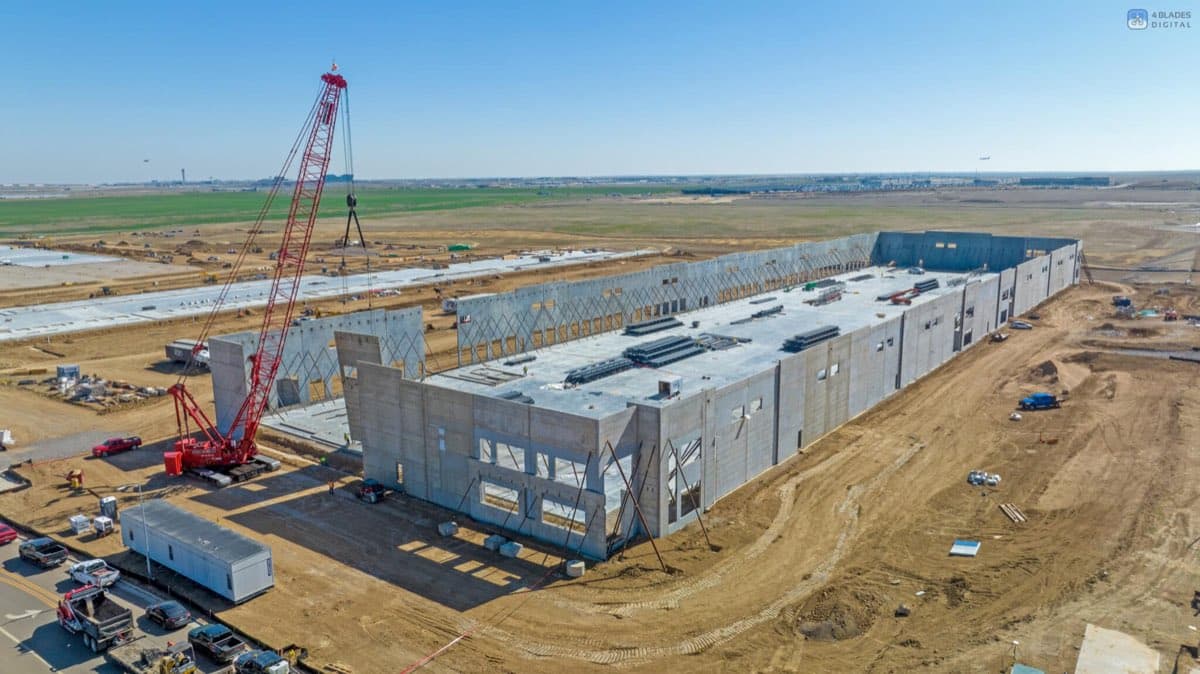
Tilt-Wall Construction
Engineered tilt-wall shells for distribution, maquila-support, and industrial facilities across the Borderplex — poured on caliche-stabilized beds and stood in El Paso's low-humidity desert air.
Open Service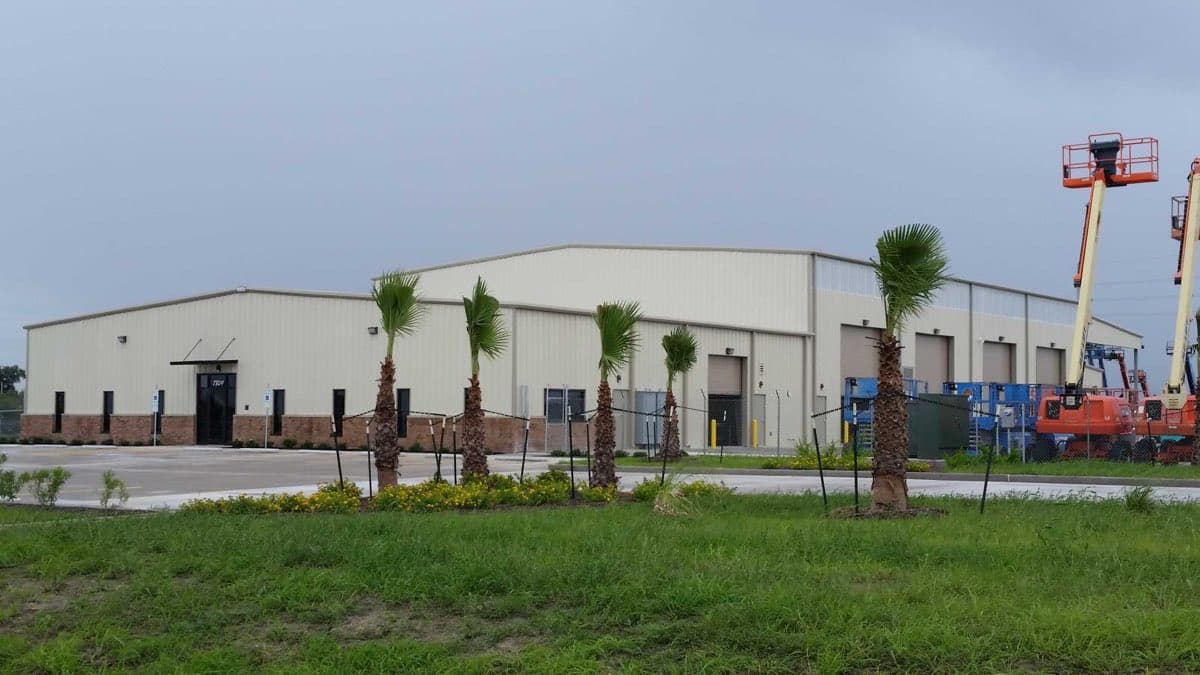
Warehouse Construction
Ground-up and expansion warehouse builds designed for BNSF/UP intermodal connectivity, Cd. Juárez maquila supply chains, and the El Paso/Santa Teresa logistics corridor.
Open Service
Industrial Construction
Industrial facility construction for maquiladora-support manufacturing, Fort Bliss defense logistics, and Borderplex process environments where sequencing and safety compliance are non-negotiable.
Open Service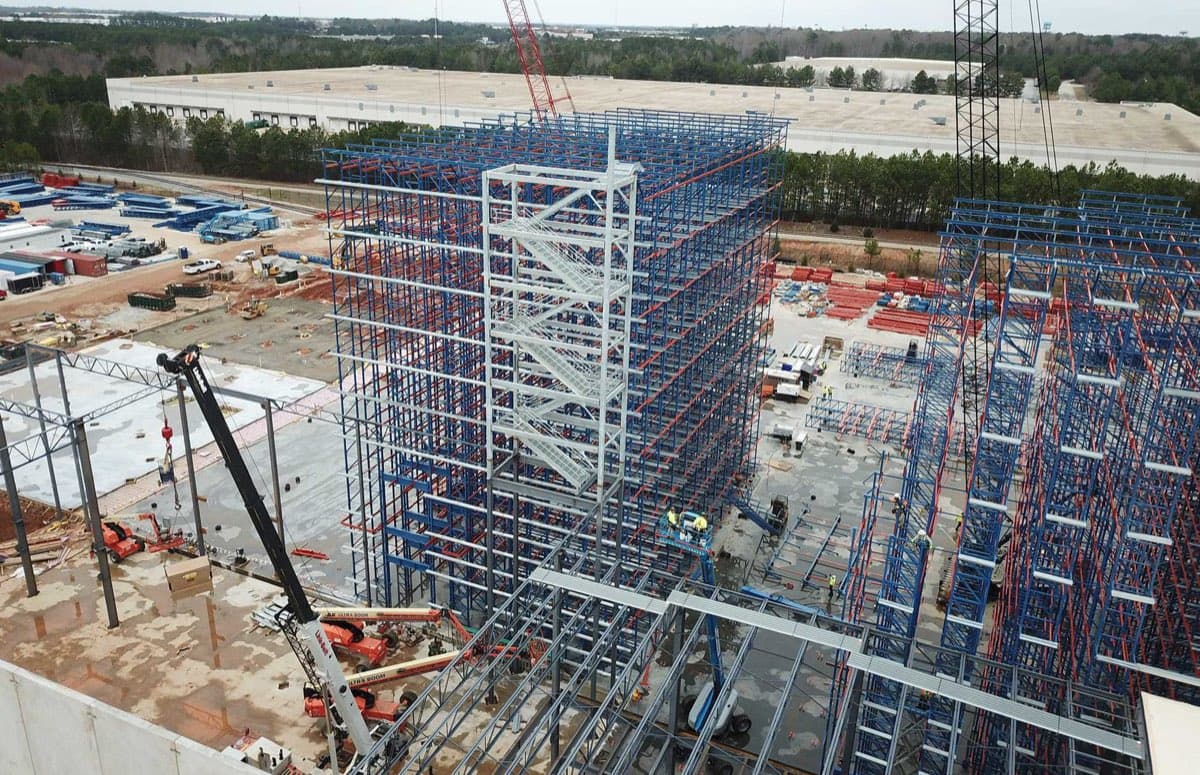
Commercial Construction
Commercial general contracting for El Paso's Sun City corridor — from UTEP-adjacent medical office to West El Paso mixed-use redevelopment — with concrete expertise at the foundation of every scope.
Open Service